
Your AI-generated prototype isn’t a finished product; it’s a high-potential blueprint that often lacks the structural integrity required for the enterprise. You’ve likely experienced the thrill of rapid generation only to hit a wall when it’s time to ensure the code is actually secure and scalable. Real-world web development for AI integration requires a move away from experimental scripts toward disciplined architecture that can handle modern compliance, such as the EU AI Act requirements coming into full force in August 2026.
We understand that the gap between a functional demo and a production-ready system feels vast, especially when legacy systems don’t play well with new models. This guide will show you how to transform those initial builds into professional-grade assets using a flexible, credit-based engineering model. You’ll learn how to identify critical technical debt, implement a roadmap for remediation, and access elite engineering capacity without the friction of traditional recruitment. Whether you’re moving to React 19.2 or stabilizing a Python 3.14.6 backend, we’re focusing on the shift from manual implementation to strategic architectural oversight.
Key Takeaways
- Bridge the gap between rapid AI prototypes and production-ready applications by prioritizing professional web development for AI integration.
- Identify the common architectural pitfalls in AI-generated code that compromise security and scalability before they impact your enterprise compliance.
- Scale your technical capacity using a flexible, credit-based engineering model that eliminates the friction and overhead of traditional hiring.
- Establish a clear roadmap for software remediation to modernize legacy systems and secure your modern AI-assisted builds.
- Transform technical debt from a cost-center into a strategic advantage through expert code reviews and ongoing maintenance support.
The Evolution of Web Development for AI Integration: Bridging the Prototype-to-Production Gap
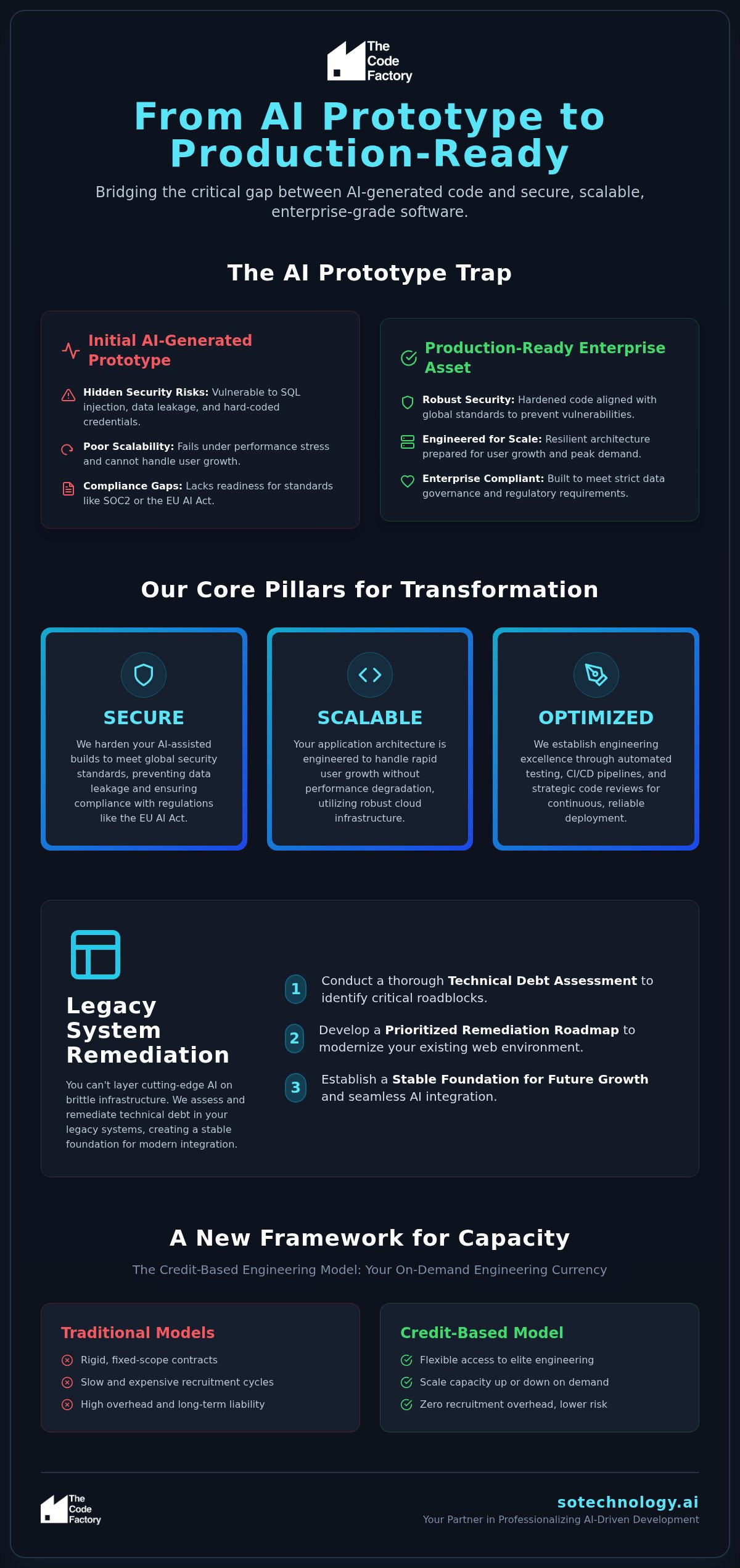
In 2026, the definition of web development for AI integration has shifted. It’s no longer just about generating a chat interface or a basic data parser. Instead, it’s the rigorous process of ensuring AI-enabled tools are secure, scalable, and enterprise-ready. While AI-assisted software development has dramatically lowered the barrier to entry, it has also created the “AI Prototype Trap.” This is where code generated by Large Language Models (LLMs) looks functional but fails basic SOC2 compliance or collapses under performance stress tests.
We act as a strategic translator for your business. This means we bridge the gap between impressive technical AI capabilities and the tangible business outcomes you actually need. Some developers claim AI makes development purely automated, but this perspective misses a critical reality. Manual code reviews are essential for maturing AI-assisted builds. Without human oversight, you’re often building on a foundation of hidden vulnerabilities and inefficient logic that won’t survive a production environment.
Production Readiness for AI-Built Software
AI-generated code blocks frequently contain subtle security risks. These include SQL injection vulnerabilities, poor error handling, and hard-coded credentials that an automated tool might overlook. Transitioning from a proof of concept requires a robust scalable web application architecture. We focus on hardening your code, ensuring it meets strict data governance standards like the EU AI Act’s August 2026 deadlines.
Legacy System Remediation: The Foundation for AI
For established organizations, integrating AI with legacy systems is often the first hurdle. You can’t layer cutting-edge AI on top of brittle, outdated infrastructure without consequences. We use technical debt assessments to identify roadblocks in your existing web environment. By prioritizing remediation, we ensure your legacy systems don’t just survive the integration; they become a stable foundation for future growth.
A New Framework for Capacity: The Credit-Based Engineering Model
Traditional procurement models often struggle to keep pace with the rapid iteration cycles of artificial intelligence. Fixed-scope contracts are frequently too rigid, while hiring full-time specialists is both slow and expensive. We solve this by providing “engineering currency” through a credit-based model. This framework offers flexible access to elite engineering capacity, allowing you to scale up or down as your project requirements shift. It’s a lower-risk alternative to traditional hiring that eliminates recruitment overhead and long-term liability.
Credits apply across your entire technical stack. You might use them for deep security hardening one month and then pivot to refining your enterprise application integration strategy the next. This adaptability is vital for effective web development for AI integration. It’s a world where the ability to respond to new model releases or regulatory updates is a competitive necessity. If you’re ready to see how this model fits your roadmap, you can schedule a discovery meeting to explore your specific needs.
Core Pillars: Secure, Scalable, and Optimized
We focus on three non-negotiable outcomes. Security is paramount; we align your builds with global standards for secure AI system development to prevent vulnerabilities like data leakage or prompt injection. Scalability ensures your database and cloud infrastructure, such as AWS EC2 capacity blocks, can handle user growth without performance degradation. Finally, engineering excellence means implementing automated testing and CI/CD pipelines to support continuous, reliable AI deployment.
How to Implement a Credit-Based Strategy
- Step 1: Conduct an AI Discovery Workshop. This identifies high-ROI use cases and bridges the gap between your vision and technical reality.
- Step 2: Audit your current code. We use tools like The Code Registry to identify technical debt and security gaps in your existing AI-generated or legacy builds.
- Step 3: Allocate credits for Remediation. Focus on fixing foundational issues first before moving to priority feature development.
Maximizing ROI: Professionalizing Your 2026 Digital Ecosystem
Professionalizing your digital ecosystem means moving beyond the initial excitement of AI generation toward a model that drives sustainable value. Many organizations view software as a cost center, but professional web development for AI integration flips this perspective by turning your technical stack into a value-creation engine. When your systems are built with structural integrity, they don’t just perform tasks; they provide the stability required for rapid innovation. Even large-scale institutions like the U.S. Department of Defense utilize Enterprise-Scale AI Coding Tools to ensure their infrastructure meets the highest standards of reliability and performance.
The long-term impact of AI in digital transformation is measured by operational efficiency and the ability to scale without friction. Our fractional CTO support provides the strategic oversight needed to ensure your technology remains an asset rather than a liability. This is particularly vital when positioning your organization for an exit or investment. Rigorous technical due diligence often exposes the flaws in unrefined AI builds, making proactive remediation a financial necessity for any business looking to prove its long-term viability.
From Technical Debt to Strategic Growth
Ignoring remediation creates hidden costs that eventually surface as security breaches, system downtime, and lost market trust. These issues are often the result of “black box” code that lacks proper documentation or security hardening. Remediation is the bridge between an AI prototype and a robust enterprise solution. By addressing these foundational gaps now, you clear the path for future features and ensure your application remains Secure and Scalable as user demands grow.
Future-Proofing with Managed AI Agent Integration
Integrating autonomous AI agents into your web infrastructure is the next frontier of business growth. Through our managed AI agent integration services, you can deploy agents that handle complex workflows within a professionalized environment. This isn’t a “set and forget” process. The flexible credit model provides the continuous support and maintenance required to keep these agents optimized. It ensures your 2026 digital ecosystem remains “always-on,” adapting to new data and evolving security requirements without the need for constant, expensive recruitment cycles.
Securing Your Competitive Advantage in the AI Era
The journey from an AI-generated prototype to a resilient, enterprise-grade application doesn’t have to be a source of technical friction. By prioritizing professional web development for AI integration, you ensure that your systems are both secure and scalable from the foundation up. We’ve explored how a flexible, credit-based engineering model provides the capacity you need to address technical debt while maintaining the agility to innovate. The gap between a functional demo and a production-ready application is significant; it’s a gap we bridge through strategic engineering and disciplined remediation. Organizations looking to professionalize their builds can benefit from understanding full stack AI-driven web development practices that address security vulnerabilities and scalability challenges from the ground up.
As your global partner for digital transformation, we focus on the redemption of AI-generated technical debt to ensure your builds are truly enterprise-ready. This approach allows you to focus on business growth while we handle the rigorous engineering required for professional-scale deployment. We act as your strategic translator, turning complex technical challenges into clear, actionable outcomes that drive long-term value for your organization.
Your vision deserves a platform that can support its full potential. We’re ready to help you build a secure, future-proof digital ecosystem that moves your business forward with confidence.
Frequently Asked Questions
What are enterprise web development services compared to standard web design?
Enterprise web development focuses on high-performance architecture and security compliance rather than just aesthetic layouts. While standard web design often prioritizes the user interface, enterprise solutions ensure the backend is robust enough to support thousands of concurrent users and sensitive data transactions. This includes rigorous load testing and adherence to global standards like SOC2 or the EU AI Act.
Why does AI-generated code require professional remediation?
AI-generated code requires remediation because Large Language Models often prioritize immediate functionality over long-term security and architectural best practices. While an AI tool can quickly generate a working script, it frequently introduces vulnerabilities such as injection risks or inefficient database queries. Professional web development for AI integration ensures this raw code is hardened, optimized, and ready for a production environment.
How does a credit-based engineering model work for large organizations?
A credit-based model works by providing a pool of “engineering currency” that you can allocate to various tasks as your business priorities shift. Instead of being locked into a rigid project scope, your organization can deploy credits for immediate code reviews, security patches, or feature development. It’s a flexible approach that provides specialized talent on demand without the administrative burden of traditional hiring.
Can you modernize legacy systems while integrating new AI features?
Yes, you can modernize legacy systems simultaneously with AI integration by identifying and resolving the technical debt that blocks new capabilities. We use detailed technical assessments to find where older infrastructure conflicts with modern AI tools. This allows for targeted remediation, ensuring your established systems become a stable, scalable platform for advanced features like autonomous digital agents. For a comprehensive look at how professionalising AI-driven web development projects reduces security risks during this process, a structured full stack approach provides the clearest path forward.