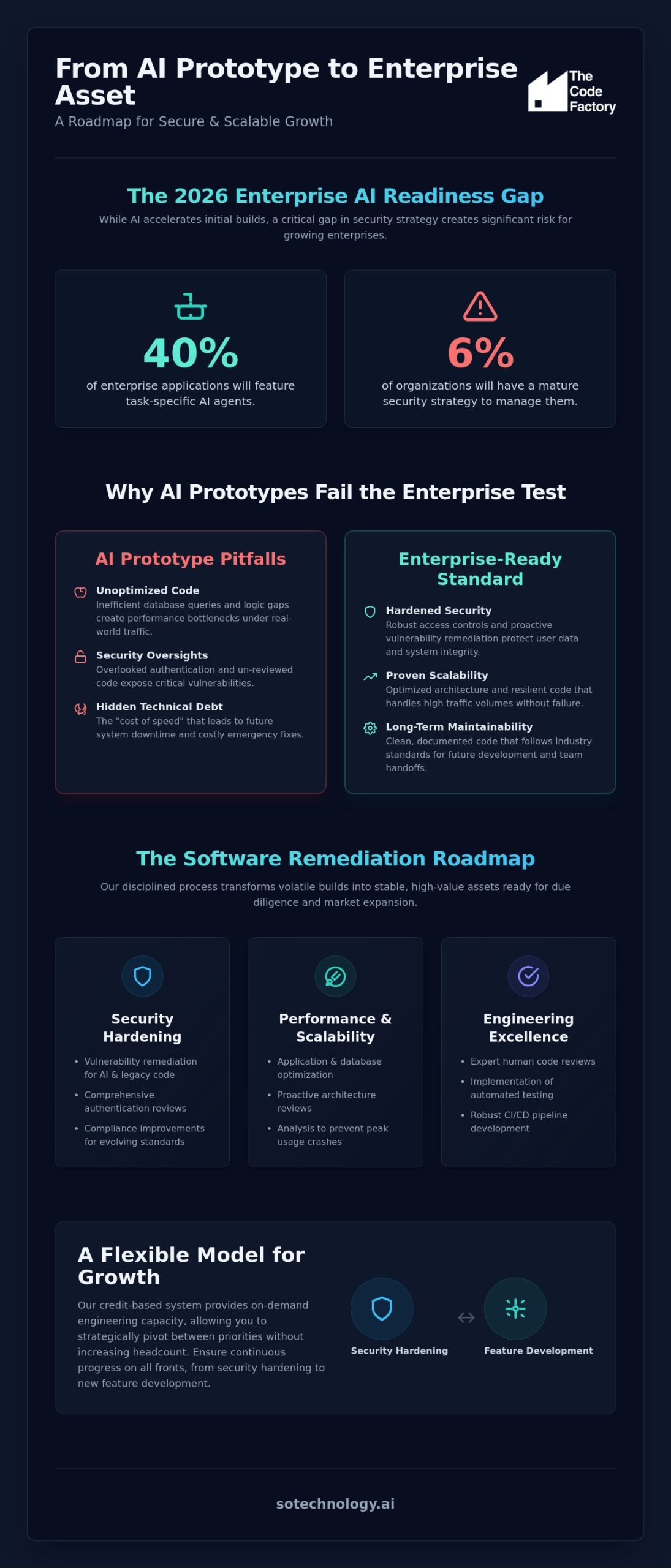
By the end of 2026, 40% of enterprise applications will feature task-specific AI agents, but only 6% of organizations will have a mature security strategy to manage them. This gap creates a precarious reality for leaders who have used AI to accelerate their initial builds. While AI helps you move fast, it often leaves behind a wake of technical debt and un-reviewed code that struggles to handle real-world traffic. Achieving true Scale & Security requires more than just a functional prototype; it demands a deliberate transition to professional-grade engineering.
You have likely felt the tension between the need for rapid growth and the nagging uncertainty of your software’s underlying stability. We understand that the jump from a clever AI-assisted build to a robust enterprise solution feels like a massive hurdle, especially when specialized talent is hard to find. This article provides a clear roadmap to technical maturity. You will learn how to harden your infrastructure, address legacy vulnerabilities, and utilize flexible engineering capacity to ensure your systems are ready for the demands of a global market.
Key Takeaways
- Understand why AI-generated code often falls short of enterprise requirements and how to identify hidden technical debt before it impacts your growth.
- Learn how software remediation bridges the gap between a functional prototype and a secure, high-performance system through expert code reviews.
- Discover the strategic balance of Scale & Security required to expand your user base while maintaining absolute data integrity and system stability.
- Explore how a credit-based model provides flexible engineering capacity, allowing you to pivot between security hardening and feature development without increasing headcount.
- Gain a clear roadmap for transforming rapid AI builds into resilient, long-term assets that pass rigorous corporate due diligence.
The Scale & Security Dilemma in the AI Era
Growth is the ultimate objective, but it shouldn’t come at the expense of your system’s integrity. We define Secure Scale as the ability to expand your user base and transaction volume without increasing technical risk or compromising data. While AI tools allow for rapid prototyping, assuming that AI-generated code is inherently production-ready for the enterprise is a dangerous misconception. Genuine expansion requires a deep understanding scalability to ensure your infrastructure remains stable under pressure. Rapid scaling often exposes structural cracks that were invisible during the MVP stage, such as poorly managed state or inadequate error handling. You need a strategic partner who can translate technical debt into an actionable roadmap for growth, ensuring your Scale & Security goals are met simultaneously.
Why Prototypes Fail the Enterprise Test
AI-built tools frequently suffer from unoptimized database queries and overlooked authentication reviews. These bottlenecks stay hidden during initial development but become critical failures once traffic spikes. Technical debt in AI-assisted development is the hidden cost of speed that eventually demands payment through system downtime or security breaches. Without professional oversight, these prototypes lack the resilience required for enterprise-level deployment. Remediation is necessary to clean up logic gaps and ensure the code follows industry-standard patterns that human engineers can maintain. By addressing these issues early, you prevent the compounding costs of a broken architecture.
The Role of Security Hardening in Growth
Security hardening isn’t a barrier to expansion; it’s the foundation that makes it possible. By conducting production readiness reviews before market expansion, you ensure your build is resilient enough to handle real-world threats. This process identifies vulnerabilities in both modern AI-generated code and legacy systems, allowing for targeted remediation. Hardening your systems transforms a fragile prototype into a robust enterprise asset that can withstand the pressures of a competitive market. It provides the confidence needed to pursue larger contracts and more complex integrations, knowing your infrastructure is built to last.
Software Remediation: Bridging the Gap to Enterprise Quality
Software remediation is the disciplined process of optimizing and securing existing code to meet modern enterprise standards. It moves beyond the reactive “fix-it” approach, transforming a volatile build into a stable, high-value asset. For organizations looking to attract investment, remediation is a proactive strategy to increase software asset value for VC and PE firms who demand rigorous technical due diligence. By implementing engineering excellence through automated testing and robust CI/CD pipelines, you ensure that every update strengthens rather than weakens your build. Achieving the right balance of Scale & Security requires this foundational work to prevent technical debt from stalling your momentum.
Securing AI-Generated and Legacy Systems
Bridging the gap between cutting-edge AI tools and established legacy systems requires a methodical approach to security hardening. This isn’t just about new code; it’s about ensuring your entire ecosystem is resilient. Use this checklist to guide your efforts:
- Vulnerability Remediation: Identifying and patching security gaps in AI-generated logic.
- Authentication Reviews: Ensuring robust access controls across all user touchpoints.
- Compliance Improvements: Aligning software with evolving standards like the Illinois AI Safety Measures Act of 2026.
Integrating these elements is a critical step in AI in Digital Transformation, ensuring your roadmap leads to a professionalized enterprise environment that protects your users and your reputation.
Performance and Scalability Optimisation
Application and database optimization serve as the primary drivers for handling increased traffic without system failure. While many look for cloud solutions for scale and security, the software layer must be optimized to prevent architecture-related crashes during peak usage. Architecture reviews identify where your system might buckle, allowing you to harden the build before the next major growth spurt. Achieving Scale & Security at the infrastructure level is only half the battle; the code must be just as resilient. If you’re ready to evaluate your current build’s readiness, consider booking a discovery meeting to map out your remediation needs.
Achieving Scale with Flexible Engineering Capacity
Expanding your technical team shouldn’t require a permanent increase in headcount or the heavy overhead of traditional recruitment. We utilize a credit-based model that acts as your engineering currency, providing the agility to scale without the friction of long-term employment contracts. This system allows you to allocate resources exactly where they are needed most, whether that’s performing critical security reviews, developing new features, or addressing legacy system bugs. By aligning your growth strategy with SBA cybersecurity best practices, you ensure that every credit spent contributes to a more resilient infrastructure. Unlike traditional agencies that focus on billable hours, our model prioritizes outcomes and tangible software improvements.
For businesses undergoing rapid transformation, a fractional CTO approach provides high-level strategic oversight without the cost of a full-time executive. This leadership ensures that your technical roadmap remains aligned with your commercial goals. It bridges the gap between raw engineering and business value, turning technical challenges into competitive advantages. This strategic layer is essential for maintaining the delicate balance of Scale & Security as your project matures.
The Credit Model: Scaling at Your Own Pace
The beauty of engineering currency lies in its inherent flexibility. Credits can roll over to accommodate changing business priorities, ensuring you aren’t forced to spend budget on low-priority tasks just to meet a deadline. These credits are highly versatile, allowing you to pivot from deep-dive AI Consulting Services and strategic workshops to active code remediation in a single sprint. As AI tools continue to evolve, this model provides the ongoing support and maintenance required to keep your systems at the cutting edge without creating new technical debt.
From Prototype to Professional-Grade Product
The journey from a fragile AI-generated prototype to a robust enterprise solution follows a proven path: Discovery, Assessment, Remediation, and Scaled Support. We act as your strategic translator throughout this process, turning complex technical requirements into actionable growth. By professionalizing your AI-assisted builds today, you create a secure and scalable foundation that drives long-term impact. It’s time to move past the limitations of the MVP and build a product that is truly ready for the enterprise stage.
Transform Your AI Vision into Enterprise Reality
Moving from an AI-generated prototype to a professional-grade product requires a shift in perspective. It’s about recognizing that initial speed shouldn’t compromise long-term stability. By prioritizing outcome-focused remediation services, you transform fragile code into a resilient asset that meets the highest standards of technical due diligence. This strategic approach ensures your systems are ready for the market, providing the reliability your partners and investors expect. Our flexible credit-based model acts as your engineering currency, allowing you to adapt to shifting priorities without the burden of permanent headcount.
Achieving consistent Scale & Security is a continuous journey rather than a one-time fix. With our enterprise-ready AI expertise, we help you bridge the gap between initial innovation and sustainable growth. It’s time to professionalize your build and secure your competitive edge in a rapidly evolving landscape. Book an AI Discovery Workshop to roadmap your scale and security strategy today. We’re ready to help you build a robust foundation for your business’s future.
Frequently Asked Questions
What is the difference between an AI prototype and an enterprise-ready product?
An AI prototype is a proof of concept designed for speed, whereas an enterprise-ready product is built for long-term stability. While a prototype might demonstrate a feature, it often lacks the robust error handling and production-grade security needed for real-world traffic. Enterprise solutions require rigorous testing and architectural reviews to ensure they can handle growth without failure. This transition is where professional engineering turns a clever idea into a resilient business asset.
How does software remediation improve both scale and security?
Software remediation improves Scale & Security by identifying and fixing structural weaknesses within your code. By optimizing database queries and cleaning up inefficient logic, we ensure your system stays online during high-traffic events. Simultaneously, we close security gaps that AI tools often overlook, such as improper authentication or data leaks. This proactive approach turns technical debt into a secure foundation that supports your business’s expansion.
Why is technical debt more common in AI-assisted development?
Technical debt accumulates quickly in AI-assisted development because these tools prioritize working code over maintainable code. AI generators often produce non-standard patterns or redundant logic that functions in isolation but fails at scale. Without human oversight, these small inefficiencies compound into a fragile architecture. Expert remediation is necessary to align this code with industry standards, ensuring it remains secure and easy for your team to manage in the future.
How does a credit-based engineering model help a scaling business?
A credit-based model provides the flexible engineering capacity needed to scale without the risk of permanent hires. It functions as a versatile currency, allowing you to allocate resources to security hardening one week and feature development the next. This model is particularly effective for businesses with fluctuating needs, as it provides high-level expertise on demand. You get the benefits of a full engineering team with the agility of a fractional partner.
What are the first steps in a security hardening process for legacy systems?
The first step in hardening legacy systems is a thorough technical audit to identify existing vulnerabilities. We use specialized assessments to map out technical debt and prioritize remediation tasks based on their impact on security and performance. This initial discovery phase provides a clear roadmap for improvement, ensuring your older infrastructure can integrate safely with modern AI tools. It’s about creating a stable environment before adding new layers of complexity.