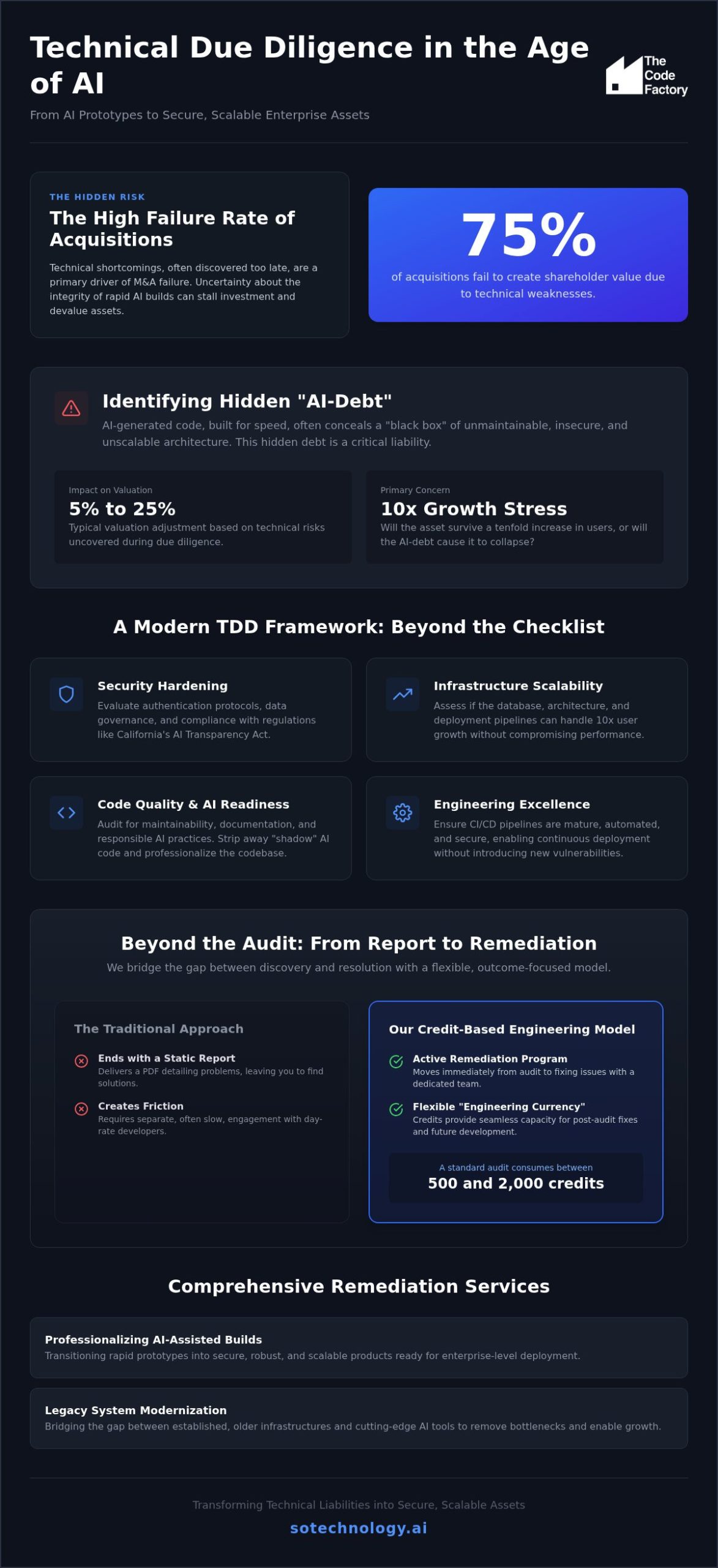
Did you know that nearly 75% of acquisitions fail to create shareholder value because of technical shortcomings identified too late? When you are evaluating a software asset in 2026, the primary concern isn’t just what the code does today, but whether it will survive the stress of 10x growth tomorrow. You need technical due diligence services that go beyond a simple checklist to uncover hidden security vulnerabilities and assess the true quality of AI-generated codebases. It is natural to feel uncertain about the integrity of rapid AI builds, but that uncertainty shouldn’t stall your investment strategy.
We understand that a static report is only half the battle. You need a concrete plan to move from discovery to remediation. In this article, you will learn how to transform technical due diligence from a defensive risk assessment into a proactive roadmap for scalability. We will examine the impact of new regulations like California’s Transparency in Frontier Artificial Intelligence Act and explain how a flexible, credit-based engineering model provides the continuous support required to professionalize AI prototypes. By the end, you will have the confidence to turn legacy debt into a secure, enterprise-grade foundation for the future.
Key Takeaways
- Identify hidden “AI-debt” by looking beyond the user interface to audit the underlying architecture and long-term maintainability of automated builds.
- Utilize professional technical due diligence services as a strategic foundation for security hardening and preparing infrastructure for 10x user growth.
- Bridge the gap between rapid AI-generated prototypes and professional enterprise solutions through targeted software remediation for both modern and legacy systems.
- Leverage a flexible, credit-based engineering model to turn audit findings into a continuous, outcome-focused development roadmap without the friction of day-rates.
- Transform the due diligence process from a defensive risk assessment into a proactive strategy for maturing your software assets and securing your investment.
What is Technical Due Diligence in the Age of AI?
Technical due diligence is no longer just a pre-acquisition formality; it is a vital assessment of a software asset’s security, scalability, and maintainability. In 2026, professional technical due diligence services are essential because the surface level of an application often masks significant “AI-debt” that can cripple a business post-acquisition. AI-debt occurs when code is generated quickly without regard for future scalability or security standards, creating a “black box” that developers struggle to maintain. This shift moves the process from a defensive audit to a proactive strategy for value creation.
Venture capital and private equity firms rely on these insights to validate valuations and secure their investments. While a sleek UI might suggest a high-value product, technical due diligence services reveal the true state of the codebase. These findings often lead to price adjustments of 5% to 25% based on the technical risks uncovered. M&A advisors also use this data to prepare for a smooth exit, ensuring there are no surprises during the buyer’s final review.
The Strategic Translator: Bridging Code and Commerce
SoTechnology functions as an expert intermediary, translating dense technical debt into clear business risks and ROI projections. We provide detailed AI Readiness Assessments that help modern software portfolios determine if their code is ready for professional-grade deployment. This clarity allows partners to move forward with confidence—whether they are evaluating an AI-powered platform like QuickApply or managing a complex enterprise suite—knowing exactly how their technology supports their growth objectives and long-term security needs.
Identifying Legacy Systems and Remediation Needs
Legacy systems aren’t merely old; they are often the primary bottlenecks preventing digital transformation and 10x growth. We bridge the gap between these established infrastructures and cutting-edge AI tools through comprehensive Software Remediation. Software Remediation turns a technical liability into a secure and scalable enterprise asset that supports long-term business goals, providing a foundation for high-performance tools like DeskOwl to deliver reliable AI-powered phone answering and booking services.
The TDD Framework: Security, Scalability, and AI Readiness
A modern framework for technical due diligence services must look deep into the engine room of a software asset. We focus on four critical pillars: security hardening, infrastructure scalability, code quality, and engineering excellence. It isn’t enough to check if the code works today. We evaluate if the authentication protocols are robust and if the database can handle 10x user growth without collapsing. By partnering with The Code Registry, we identify technical debt and security concerns with automated precision; a standard audit typically consumes between 500 and 2,000 credits. This data-driven approach ensures that your CI/CD pipelines are mature enough to support continuous deployment without introducing new vulnerabilities.
Professionalising AI-Assisted Builds
Many startups in 2026 rely on AI-generated prototypes to reach market quickly. While these builds are impressive, they often lack the enterprise-grade architecture required for long-term stability. We specialize in transitioning these rapid builds into secure, scalable products. This process involves stripping away “shadow” AI code and replacing it with professional infrastructure. If you are unsure about the integrity of an AI-assisted codebase, you might consider a discovery meeting to map out a clear remediation path.
AI Readiness and Data Governance
Evaluating the novelty of AI models is only the first step. We also assess responsible AI practices and data governance to ensure compliance with new standards like California’s Transparency in Frontier Artificial Intelligence Act. Our assessments verify that training data and model dependencies are documented and secure. This level of scrutiny protects your investment from future regulatory shifts and ensures the technology remains a competitive advantage rather than a legal liability.
Beyond the Audit: Remediation with Credit-Based Engineering
Most technical due diligence services end with a PDF report that details a mountain of technical debt. While identifying risk is critical, it often leaves investors and founders with a list of problems but no immediate way to solve them. We close this gap by introducing an “Engineering Currency.” Our credit-based model provides the flexible capacity needed to execute post-audit fixes immediately. This moves the engagement from a passive report into an active Software Remediation programme where outcomes matter more than traditional hourly day-rates.
For portfolio companies looking to optimize their current AI strategy, an AI Discovery Workshop is the natural next step. It allows us to look beyond the initial audit and identify specific opportunities for enterprise automation and growth. This ensures that the technology isn’t just “fixed,” but is actively contributing to the company’s valuation.
Flexible Capacity for Scaling Organizations
We offer Growth and Enterprise credit tiers designed to support multiple portfolio companies simultaneously. This structure allows VCs to deploy engineering resources where they’re needed most, whether it’s for “Fractional CTO” support or deep strategic implementation. You don’t have to hire a full-time team to address a specific security vulnerability or a scalability bottleneck; you simply draw from your credit pool to get the job done quickly and professionally.
Building a Secure and Scalable Roadmap
We turn every audit finding into a prioritized backlog of security hardening and UX improvements. This roadmap ensures that remediation isn’t a chaotic scramble but a methodical strengthening of the asset. By integrating enterprise web development services, we modernize legacy stacks and professionalize AI builds to ensure they’re truly robust. This approach transforms a technical liability into a secure, scalable foundation that’s ready for the demands of the 2026 market.
Securing Your Technical Future: From Risk to Roadmap
The software landscape of 2026 demands more than a passive checklist to protect your investment. Professional technical due diligence services provide the necessary bridge between identifying hidden AI-debt and executing a clear plan for security and scalability. By utilizing our partnership with The Code Registry for automated debt identification, you gain a data-driven perspective that translates technical complexity into actionable business value. It is the first step in transforming a potential liability into a robust enterprise asset.
Identifying a problem is only valuable if you have the capacity to solve it. Our credit-based model offers the flexible engineering support required to professionalize AI-generated builds and remediate legacy systems without the friction of traditional day-rates. This outcome-focused approach ensures that every audit leads to tangible improvements in your software portfolio. You can move forward with the confidence that your technology is secure, scalable, and ready for 10x growth.
Taking control of your technical assets today ensures they are prepared for the challenges of tomorrow. We are ready to act as your visionary partner, helping you turn technical uncertainty into strategic control.
Frequently Asked Questions
What is included in a standard technical due diligence report?
A standard report provides a comprehensive audit of software architecture, security protocols, and scalability potential. It identifies critical AI-debt and legacy system bottlenecks that might hinder growth. By utilizing technical due diligence services, you receive a clear risk assessment alongside a prioritized remediation backlog. This includes evaluating CI/CD maturity and automated testing coverage to ensure the codebase is enterprise-ready.
How long does a technical due diligence process typically take?
A full technical assessment generally takes between one and three weeks to complete. This depends on the complexity of the codebase and the depth of the required analysis. A high-level red-flag review can often be finalized within a few days to identify immediate deal-breakers. This timeline allows for deep static code analysis and a thorough review of infrastructure resilience without delaying the overall transaction schedule.
Why is AI readiness becoming a critical part of TDD in 2026?
AI readiness is now essential because many modern builds rely on rapid AI generation that lacks long-term maintainability and security. New regulations, such as California’s Transparency in Frontier Artificial Intelligence Act, require strict documentation of model architecture and data governance. Technical due diligence services evaluate these layers to ensure your AI assets are compliant and can be professionalized into stable, enterprise-grade solutions.
Can I use technical due diligence to increase the value of my software asset before an exit?
Proactive due diligence allows you to identify and fix technical liabilities before they impact your valuation during a sale. By implementing a Software Remediation program, you can resolve security vulnerabilities and scale your infrastructure to support future growth. Using a flexible, credit-based model ensures you have the ongoing engineering capacity to turn a risky prototype into a high-value, secure asset that attracts premium offers.